Sushruta’s Influence on Modern Rhinoplasty Surgery Techniques
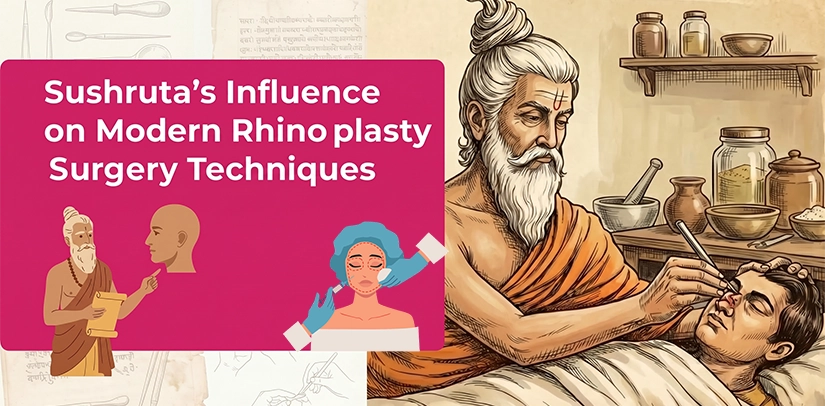
Historians widely declare Sushruta the absolute Father of Indian Surgery. Operating exactly 2,600 years ago, he heavily documented our world's first rigorously structured surgical blueprints inside ancient medical history. Elite experts constantly drop his name during modern rhinoplasty debates solely because he truly pioneered early, brilliant nasal reconstruction.
Today, clinical rhinoplasty feels insanely advanced, utilizing digital mapping, incredibly safe anesthetics, and aggressively refined microscopic techniques. However, one core philosophy remains completely unchanged: whenever facial cartilage shatters, doctors must perfectly rebuild its structural aesthetics alongside crucial breathing mechanics using highly meticulous, pragmatic methods.
Sushruta & the Origins of Nasal Reconstruction
Sushruta’s teachings are recorded in the Sushruta Samhita, an early medical text that explained surgical methods in a more structured way than was common at the time. His work covered wound care, fractures, injuries, and reconstruction of damaged body parts.
One of the most well known parts of his work is the method of rebuilding the nose using skin from the forehead area. This is why Sushruta is often linked to the early history of rhinoplasty.
Key contributions linked to nasal reconstruction
- Early recorded surgical methods in Indian history
- A structured approach to treating injuries
- Use of nearby skin to rebuild damaged nasal tissue
- Step by step surgical guidance instead of vague theory
- Early foundations of reconstructive surgical thinking
What made his work important was not only the procedure itself, but the fact that he treated reconstruction as a planned surgical solution.
What Rhinoplasty Means Today?
Today, rhinoplasty can involve both function and appearance. It may be done to:
- reshape the nose
- improve breathing
- correct structural problems
- repair damage caused by trauma
- rebuild tissue after loss or injury
This is an important distinction. Sushruta’s influence connects most clearly to reconstructive rhinoplasty, not to every form of modern cosmetic nose reshaping.
How Sushruta’s Techniques Still Influence Today’s Rhinoplasty?
Modern surgeons do not use ancient techniques directly. Rhinoplasty today depends on advanced instruments, anesthesia, sterile operating settings, and precise surgical planning. Still, some of the underlying principles remain surprisingly close in concept.
Lasting principles that still matter
- Restoring shape & function together : The nose is not only about appearance. It also has a practical role, and that balance still matters in modern rhinoplasty.
- Using the body’s own tissue when needed : In reconstructive cases, tissue planning remains an important part of nasal repair.
- Following a structured surgical approach : Sushruta described procedures in an organized way, and modern rhinoplasty still depends on careful step by step planning.
- Aiming for natural restoration : The goal is not just to repair damage, but to rebuild in a way that supports structure, balance, and function.
What Modern Rhinoplasty Has Changed?
Even though some principles remain similar, modern rhinoplasty is very different in practice.
| Early Reconstruction |
Modern Rhinoplasty |
| Basic surgical methods |
Highly specialized techniques |
| Limited tools |
Advanced surgical instruments |
| No modern anesthesia |
Better comfort and safety |
| Basic wound care |
Sterile environments and improved recovery |
So the influence is not about direct imitation. It is about how early reconstructive thinking helped shape the path toward modern nasal surgery.
Sushruta’s Legacy in Modern Plastic and Cosmetic Surgery
Sushruta’s ideas still show how reconstructive and cosmetic surgery is done today. The approach of restoring damaged areas in a careful, practical way continues even with modern tools. At Sushruta Plastic and Cosmetic Surgery Centre, this is seen in procedures like Nasal reconstruction and cosmetic treatments with focus on natural results and patient safety. Modern surgery has moved ahead in many ways, but the basic approach hasn’t really changed, it’s still about restoring shape in a careful and steady manner.